Work sample · November 2026
The Compute Book
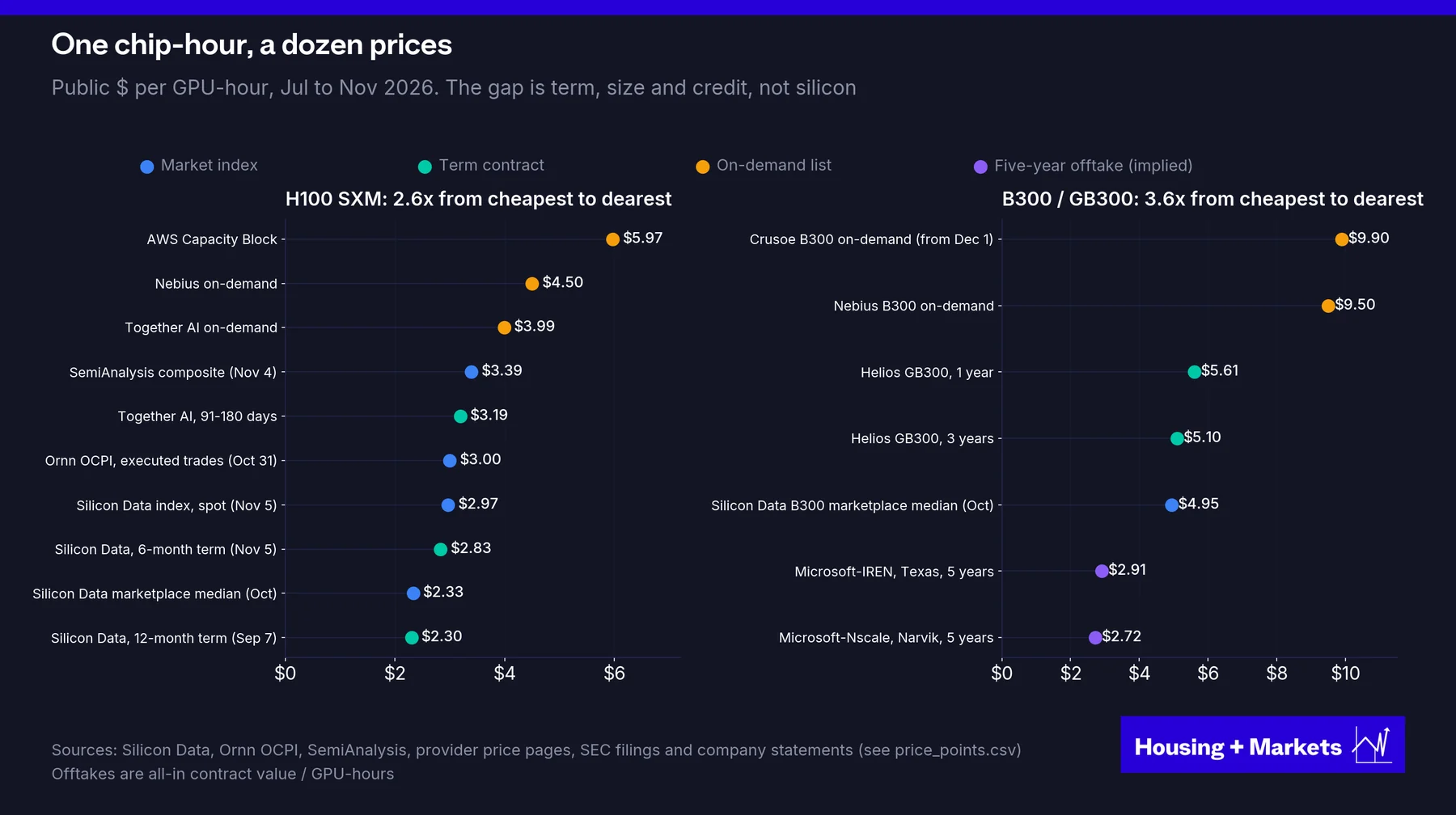
A GPU-hour has no single price. It has a term structure, a credit spread and a value that depends on the workload. Any company that buys compute and resells it is running a duration book, whether it models one or not. This is that model.
The supply contracts and demand streams are illustrative, sized to a compute aggregator with about $100M of revenue. They are not any company's actuals. Market inputs are dated public prices. Throughput is SemiAnalysis's open InferenceX benchmark data.
What it answers
| Question | How | Output |
|---|---|---|
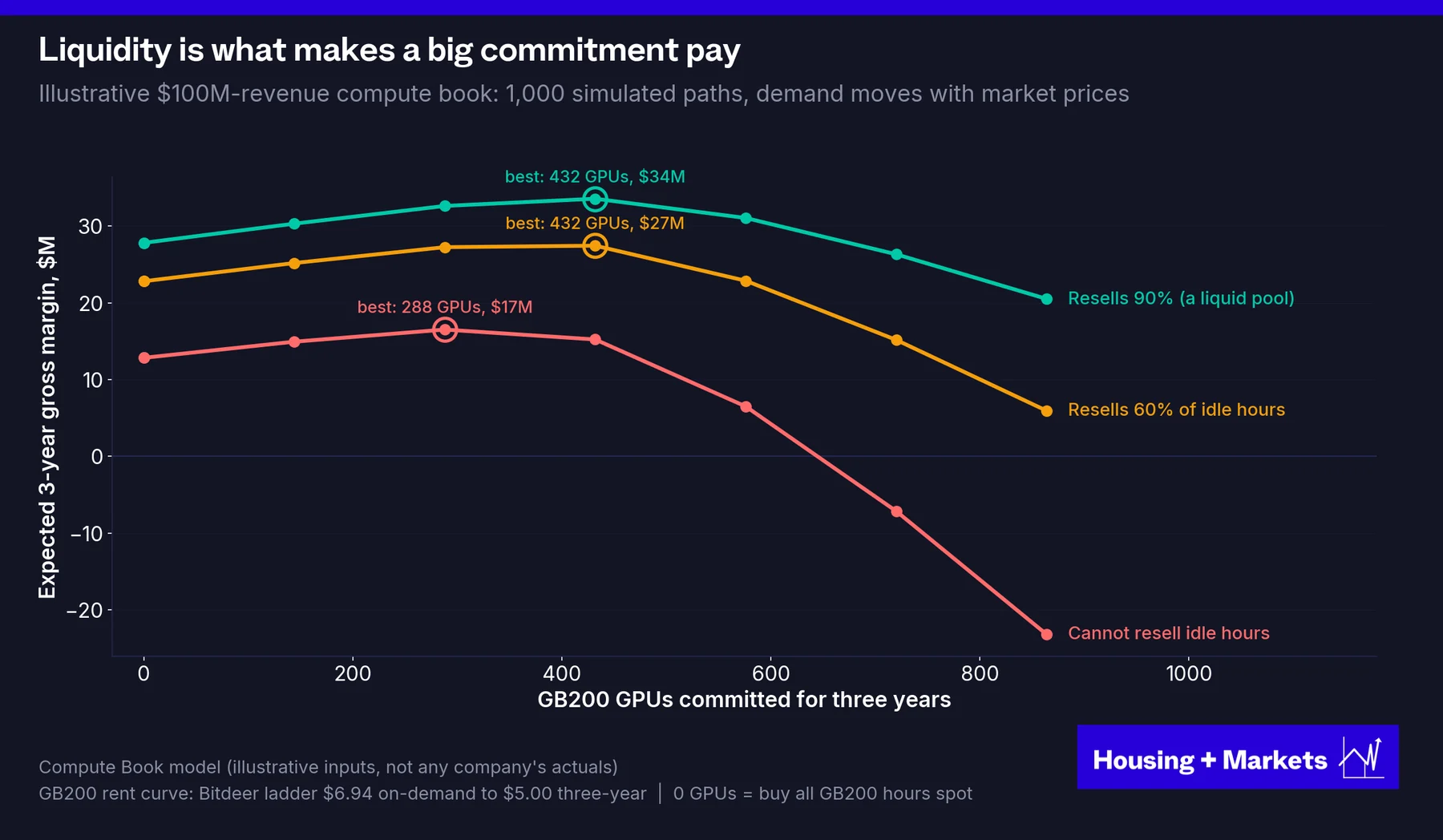
| Reserved or spot, how long, how much | Monte Carlo of the whole book; a common demand factor moves prices and the book's own demand together | Sourcing frontier by tenor and size |
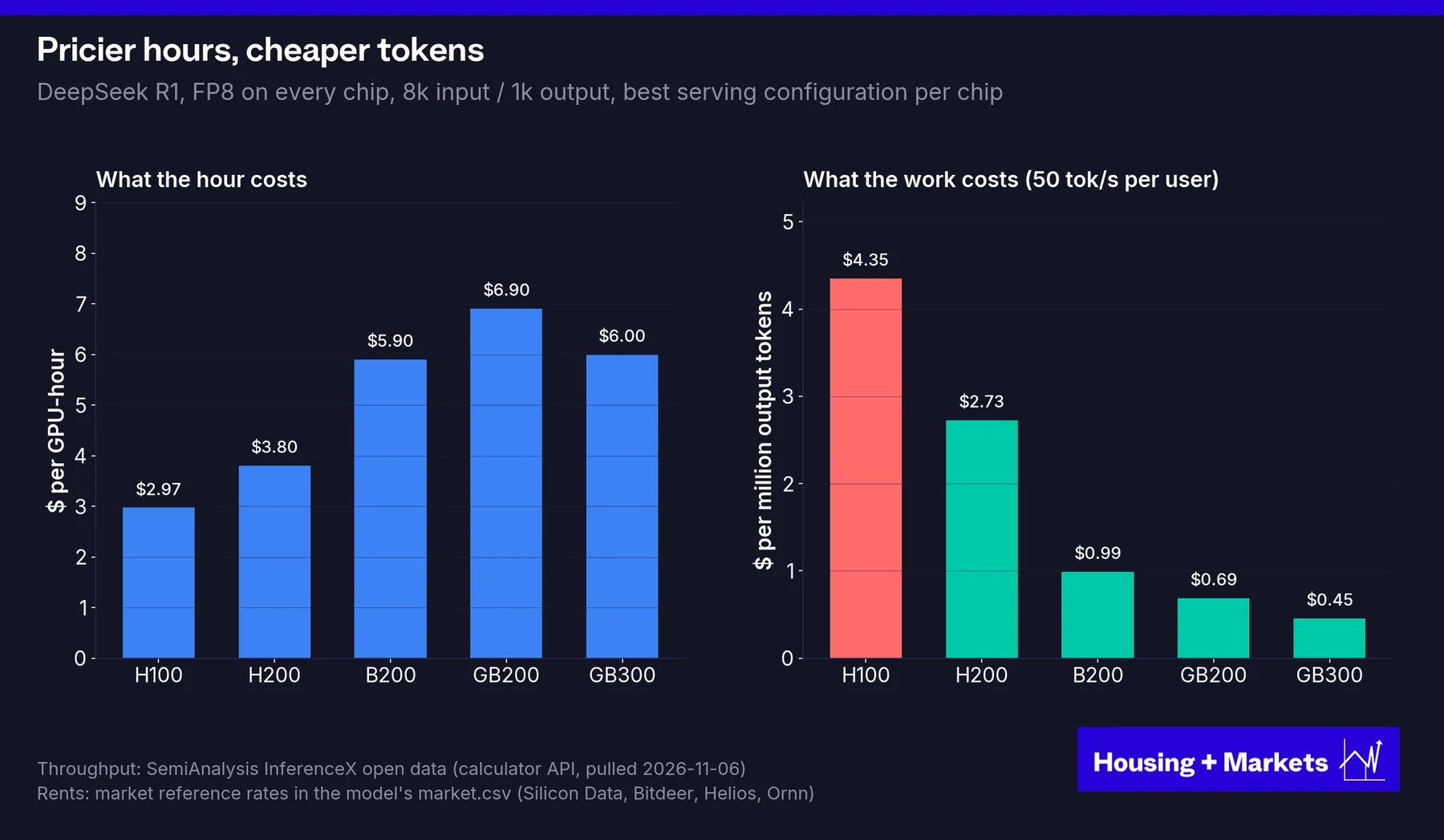
| H200, GB200 or GB300 | Measured throughput per chip at a target speed per user, times market rent | Cost per million tokens; break-even rent |
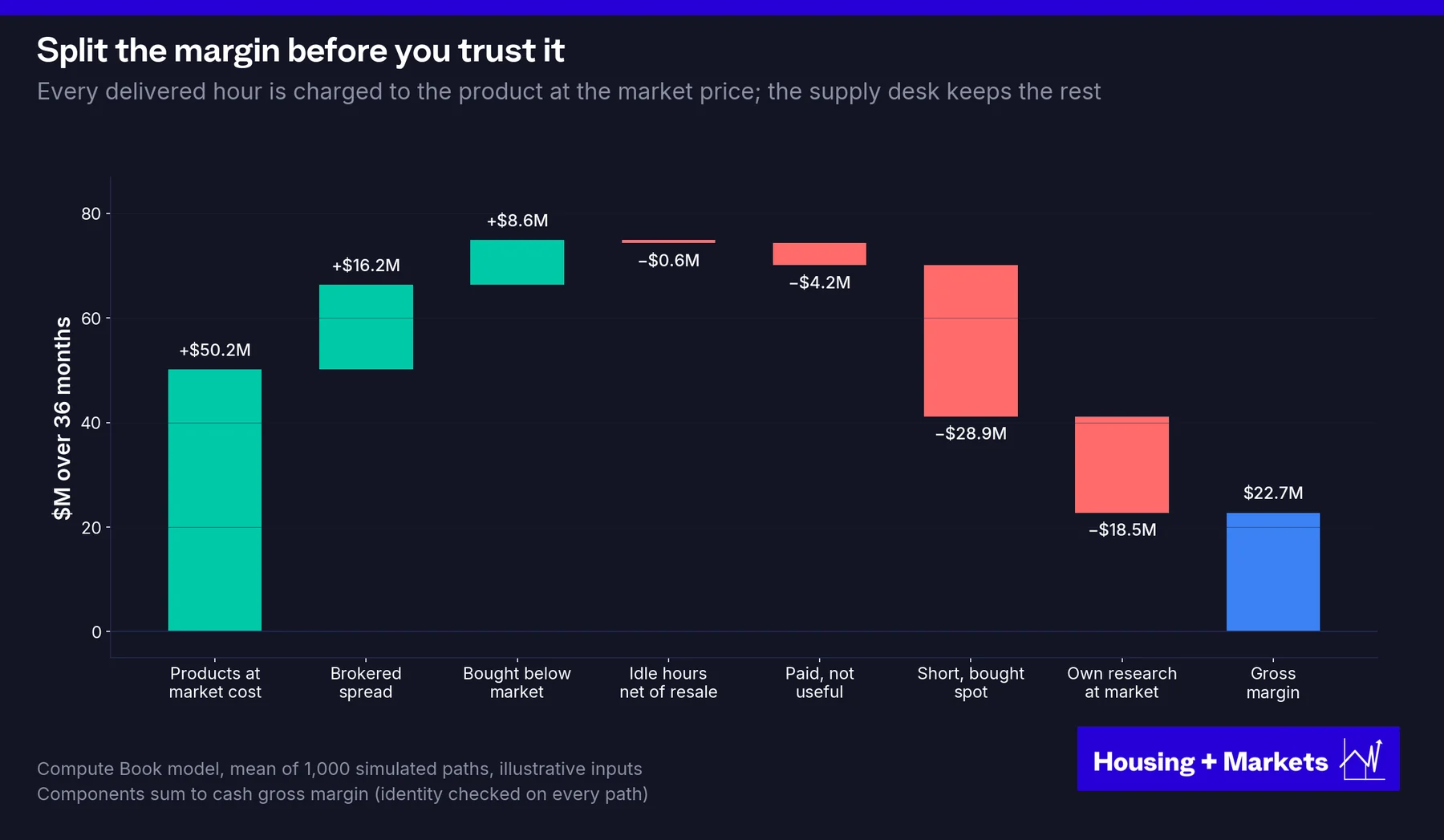
| Where the margin comes from | Every delivered hour transferred to the product at the market price | Product margin, procurement alpha, idle, quality and shortage |
| What today's bets do to the P&L | 36 months of contracts, renewals at each path's price, delivery slips, prepay credit risk | Distribution of gross margin and cash; mark-to-market |
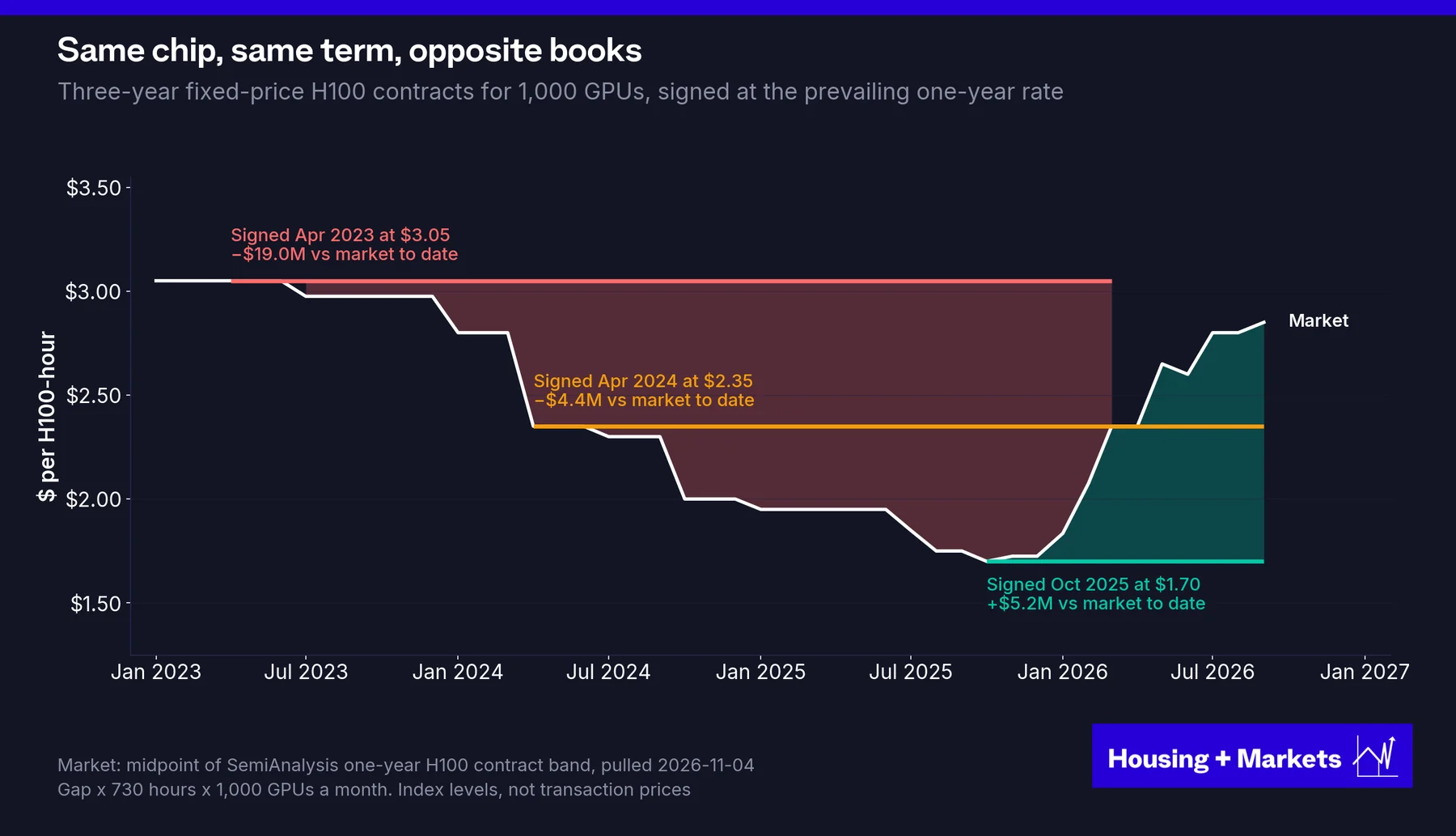
| What a vintage did | Fixed-price contracts against the one-year contract index since 2023 | Gain or loss to lease by signing date |
Exhibits
Method
Market. Each chip's expected price path is calibrated so its average over a tenor equals the quoted term rate, with a step down as the next generation arrives. A shared AI-demand factor moves every price and the book's own demand together, so the book runs short exactly when spot is dear. Volatility comes from the SemiAnalysis H100 and B200 composites.
Supply. Take-or-pay contracts carry price, prepayment, availability, goodput, a delivery slip drawn on each path and the provider's default risk on the prepaid balance. Expiring contracts renew at each path's prevailing price.
Allocation. Each month and GPU pool, contracted customers are served first, then hosted training and inference, then on-demand. Shortfalls are bought at spot plus a premium, with less filled when the market is tight. Research takes its non-deferrable share, the marketplace resells part of what is idle, and elastic research uses what nobody bought.
Margin. Products are charged the market price for every hour they use. The supply desk keeps the difference between that and the contract price, and carries idle hours, failed hours and the spot premium. The components sum to cash gross margin on every path, and the model checks that identity on each run.
Hardware. Output tokens per second per GPU come from SemiAnalysis's InferenceX Data API at a fixed speed per user and a fixed precision. They are priced at this model's market rents, not the benchmark's own cost assumptions.
Limits. Index levels and list prices are not transaction prices. The H200 and B200 reference rents differ widely across indexes. Hopper benchmark coverage for newer models is thin. The supply and demand book is invented to show the mechanism.
Files
The workbook models one GPU pool with every formula live: the monthly book, the margin split, a decision grid and a 1,000-path Monte Carlo run through Excel Data Tables (press F9). It reconciles to the Python engine to the cent.